Organs of any style, size, use & action. Made with top quality materials and design, together with the latest technologies.
A project for a new organ can be an exciting experience for the congregation and church administration, also a challenging process. We can provide service and assistance to find the best musical and visual requirements in a feasible way.
New organs are all custom made for the place in question which every part and form will need to fit in a specific planned space. The start will be to study out which is the best location for the acoustics and visual aspect and then depending on space and budget the stop list (ranks of pipes) can be planned to suite a good specification. We do provide all the drawings including 3D visuals to help the client to see how the final organ will look and how it can be planned.
A pipe organ can be one of the most valuable investments for a church as if they are well built, can last for generations and also can give a true glorious experience during services that can help to make the liturgy richer and give inspiration to the congregation.
Organs might seem to be an expensive initial purchase, but taking into account on how much time they can service it shows that it can be a wise investment an also considering the fact that they are built with high durable quality materials and made by expert workmanship in an artistic way.
Organs of any style, size, use & action. Made with top quality materials and design, together with the latest technologies.
A project for a new organ can be an exciting experience for the congregation and church administration, also a challenging process. We can provide service and assistance to find the best musical and visual requirements in a feasible way.
New organs are all custom made for the place in question which every part and form will need to fit in a specific planned space. The start will be to study out which is the best location for the acoustics and visual aspect and then depending on space and budget the stop list (ranks of pipes) can be planned to suite a good specification. We do provide all the drawings including 3D visuals to help the client to see how the final organ will look and how it can be planned.
A pipe organ can be one of the most valuable investments for a church as if they are well built, can last for generations and also can give a true glorious experience during services that can help to make the liturgy richer and give inspiration to the congregation.
Organs might seem to be an expensive initial purchase, but taking into account on how much time they can service it shows that it can be a wise investment an also considering the fact that they are built with high durable quality materials and made by expert workmanship in an artistic way.
Organs of any style, size, use & action. Made with top quality materials and design, together with the latest technologies.
A project for a new organ can be an exciting experience for the congregation and church administration, also a challenging process. We can provide service and assistance to find the best musical and visual requirements in a feasible way.
New organs are all custom made for the place in question which every part and form will need to fit in a specific planned space. The start will be to study out which is the best location for the acoustics and visual aspect and then depending on space and budget the stop list (ranks of pipes) can be planned to suite a good specification. We do provide all the drawings including 3D visuals to help the client to see how the final organ will look and how it can be planned.
A pipe organ can be one of the most valuable investments for a church as if they are well built, can last for generations and also can give a true glorious experience during services that can help to make the liturgy richer and give inspiration to the congregation.
Organs might seem to be an expensive initial purchase, but taking into account on how much time they can service it shows that it can be a wise investment an also considering the fact that they are built with high durable quality materials and made by expert workmanship in an artistic way.
Parish church of St. Jospeh, Msida.

The Parish Church of Msida has a rare example of an organ built in Malta. It was constructed in 1899 by Giovanni Felter, who was from Ħamrun. Across Malta, only two examples of organs by this builder are known, the other being in the Parish Church of Għargħur. Of these two instruments, the Msida organ is the larger, more elaborate, and better-preserved example.
The organ appears to have been built in a style most commonly found in Northern Italy, judging from both its construction methods and the period in which it was manufactured. The structure and design of the organ clearly demonstrate that it was built with great care and skill, although some minor details reveal the use of alternative methods. This may further indicate that the organ was manufactured in Malta, where certain details were probably not fully understood or interpreted in the same way as in Italy.
Felter learned the craft of organ building through an apprenticeship with Giuseppe Bergomi, an Italian organ builder who lived in Malta and who also built instruments such as the organ of the Church of Ta’ Ġieżu in Rabat, Malta.
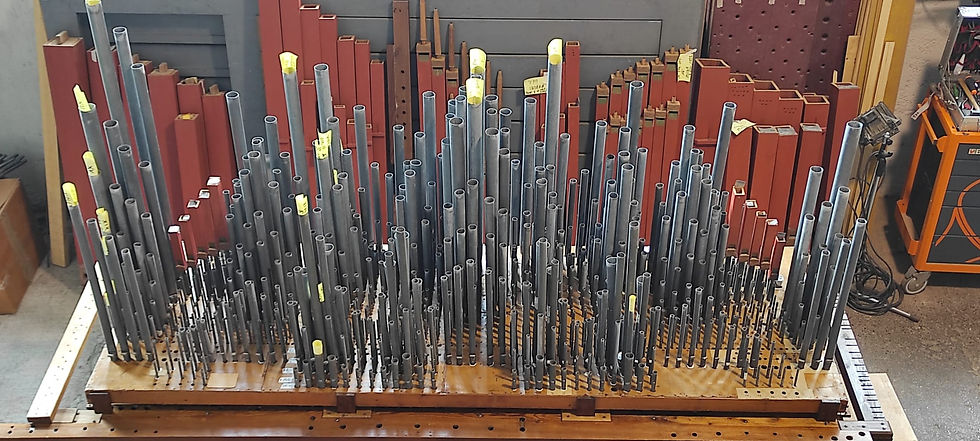
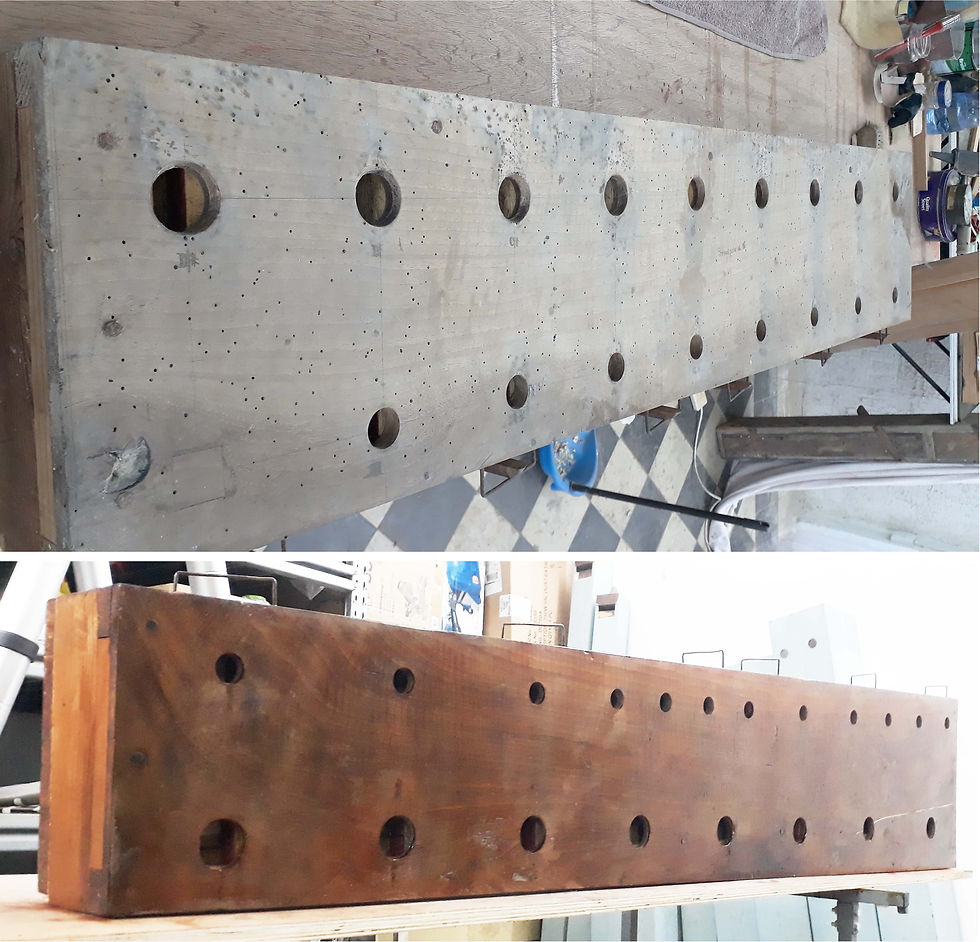
The organ contains 1,135 pipes arranged into 26 stops, played from a 58-note keyboard and a 17-note pedalboard. Its mechanism is entirely mechanical and controls a series of windchests (valve boxes) located in different sections of the organ case. The system is quite complex and can certainly be considered a masterpiece. The main windchest is typically Italian in design and is known in Italian as a ‘Sommiere a Vento’. This term refers to a windchest with a specific valve for each pipe mounted on it. This large windchest allows for the installation of various types of pipes, many of which occupy the upper range of the keyboard (the area where melodies are generally played). This clearly shows that Felter intended to create an organ with a wide variety of stops and tonal colours that could be used as solo voices, making the instrument more versatile in its tonal structure. Among these pipes are two particular stops that are unique in the Maltese Islands.
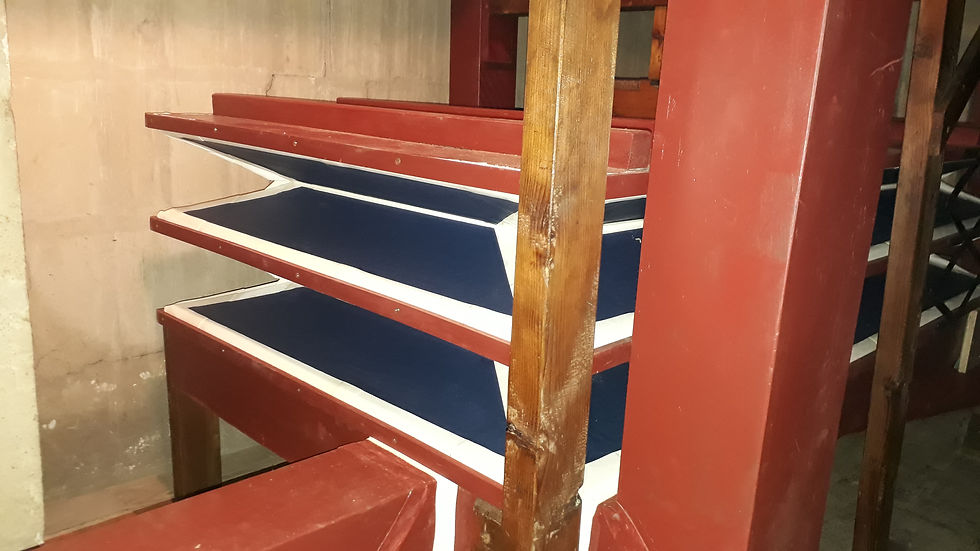
The wind system remains in its original form, with manually operated bellows located in a room adjacent to the organ, used to generate the air supply. This system has also been restored.
The organ case is another important feature of the instrument, as it is built in an Eclectic style that complements the architecture of the church very well.
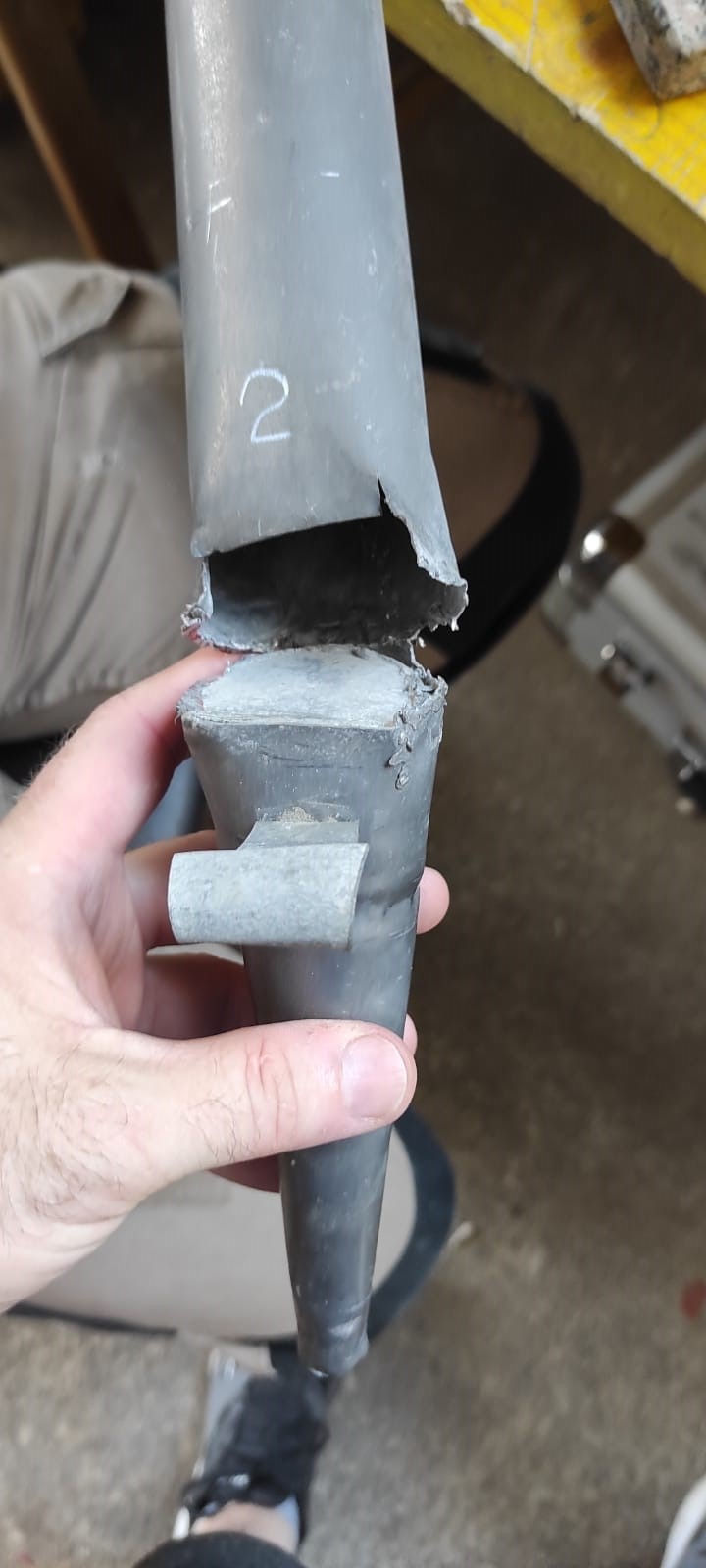
The organ was found to have suffered various forms of damage, mainly caused by severe woodworm infestation, together with other issues resulting from factors such as poor tuning and voicing methods that damaged many of the pipes.
S p e c i f i c a t i o n
DISPOSITION
LEFT COLUMN
Terza Mano
Viola Bassi
Violetta Bassi
Violino Soprani
Voce Flebile Soprani
Corni da Caccia Soprani
Duodecima Soprani
Cornetto I° Soprani
Cornetto II° Soprani
Flauto in Selva Soprani
Flauto Traverso Soprani
Ottavino Soprani
Voce Umana
Ottava al Pedale
Duodecima al Pedale
RIGHT COLUMN
Principale 16' Bassi
Principale 16' Soprani
Principlae 8' I° Bsssi
Principale 8' I° Soprani
Principale 8' II°
Ottava Bassi
Ottava Soprani
Ottava II°
Duodecima
Decimaquinta
Decimanona
Vigesima II
Vigesima VI
Vigesima IX e Trig. III
Contrabasso 16' e Rinf.
Couplers
I-P permanent
Accessories
Terza Mano (pedal)
Timballone
Flauto Traverso Soprani (pedal)
Rollante
Compass
Manual: CC - a 58 notes
Pedal: CCC - EE 17 notes
Tuning
440 Hz @ 20 °C - Equal Temperament
Wind pressure
40mm
Drawings


Photos
Restoration