


Organs of any style, size, use & action. Made with top quality materials and design, together with the latest technologies.
A project for a new organ can be an exciting experience for the congregation and church administration, also a challenging process. We can provide service and assistance to find the best musical and visual requirements in a feasible way.
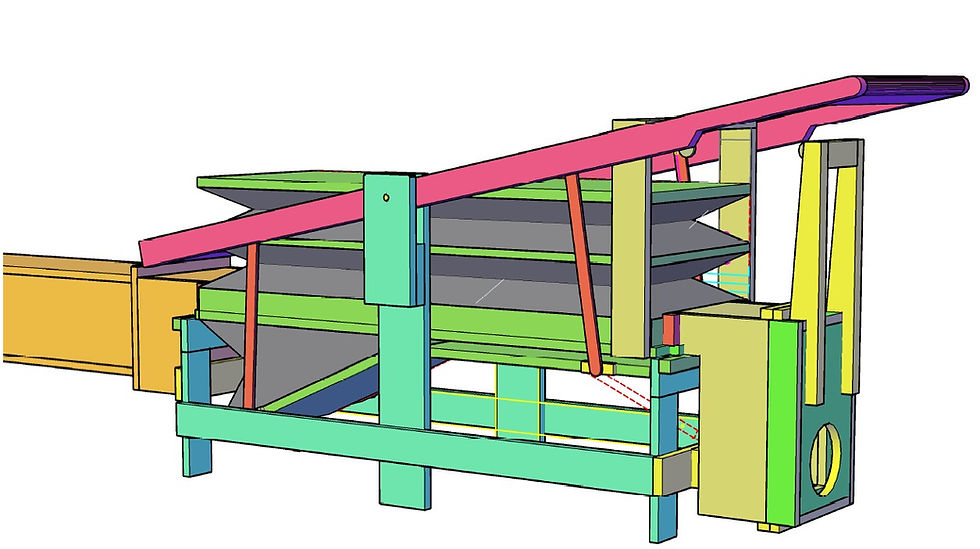
New organs are all custom made for the place in question which every part and form will need to fit in a specific planned space. The start will be to study out which is the best location for the acoustics and visual aspect and then depending on space and budget the stop list (ranks of pipes) can be planned to suite a good specification. We do provide all the drawings including 3D visuals to help the client to see how the final organ will look and how it can be planned.
A pipe organ can be one of the most valuable investments for a church as if they are well built, can last for generations and also can give a true glorious experience during services that can help to make the liturgy richer and give inspiration to the congregation.
Organs might seem to be an expensive initial purchase, but taking into account on how much time they can service it shows that it can be a wise investment an also considering the fact that they are built with high durable quality materials and made by expert workmanship in an artistic way.
Organs of any style, size, use & action. Made with top quality materials and design, together with the latest technologies.
A project for a new organ can be an exciting experience for the congregation and church administration, also a challenging process. We can provide service and assistance to find the best musical and visual requirements in a feasible way.
New organs are all custom made for the place in question which every part and form will need to fit in a specific planned space. The start will be to study out which is the best location for the acoustics and visual aspect and then depending on space and budget the stop list (ranks of pipes) can be planned to suite a good specification. We do provide all the drawings including 3D visuals to help the client to see how the final organ will look and how it can be planned.
A pipe organ can be one of the most valuable investments for a church as if they are well built, can last for generations and also can give a true glorious experience during services that can help to make the liturgy richer and give inspiration to the congregation.
Organs might seem to be an expensive initial purchase, but taking into account on how much time they can service it shows that it can be a wise investment an also considering the fact that they are built with high durable quality materials and made by expert workmanship in an artistic way.
Organs of any style, size, use & action. Made with top quality materials and design, together with the latest technologies.
A project for a new organ can be an exciting experience for the congregation and church administration, also a challenging process. We can provide service and assistance to find the best musical and visual requirements in a feasible way.
New organs are all custom made for the place in question which every part and form will need to fit in a specific planned space. The start will be to study out which is the best location for the acoustics and visual aspect and then depending on space and budget the stop list (ranks of pipes) can be planned to suite a good specification. We do provide all the drawings including 3D visuals to help the client to see how the final organ will look and how it can be planned.
A pipe organ can be one of the most valuable investments for a church as if they are well built, can last for generations and also can give a true glorious experience during services that can help to make the liturgy richer and give inspiration to the congregation.
Organs might seem to be an expensive initial purchase, but taking into account on how much time they can service it shows that it can be a wise investment an also considering the fact that they are built with high durable quality materials and made by expert workmanship in an artistic way.
St.Francis Church, Victoria.

In the St. Francis Church, Victoria Gozo, there was once a pipe organ dating from the early years of the twentieth century. Prior to the 1970s, this organ stood in the church gallery and served the liturgical needs of the parish. Sometime after that period, the organ was removed from the gallery and most of its components were unfortunately discarded. However, some parts were preserved, providing valuable evidence of the instrument's original design and construction.
In 2012, the church expressed a desire to investigate the possibility of restoring the organ. The aim was to reinstate a pipe organ that could serve both the liturgical requirements of the church and the growing demand for cultural and performing arts events. Located in the heart of Victoria, the capital city of Gozo, the church is frequently sought as a venue for concerts and other artistic activities, making the presence of a pipe organ highly desirable.
Studies and consultations commenced immediately. After several years of research, documentation, and evaluations, a viable solution was identified. It was determined that the surviving components of the original organ could be restored, while the missing sections would need to be reconstructed. The objective was to recreate an instrument closely reflecting the style and character of the original organ while ensuring that its design complemented the surrounding architecture. At the same time, the specification was developed to meet both liturgical and concert requirements.
A significant design consideration was that the entire organ had to be accommodated within the gallery arch. This differs from the original instrument, whose casework projected partly beyond the arch. At the time of its construction, the decorative paintings that now adorn the church interior were not yet present, making the original arrangement possible.
The final design resulted in a one-manual and pedal organ with twelve stops, several of which are divided into bass and treble sections. The instrument comprises a total of 702 pipes, including 54 wooden pipes and 648 metal pipes, and is operated entirely through mechanical action. The keyboard features bone-covered naturals with rosewood fronts and ebony sharps, while the pedalboard is constructed from oak for the natural notes and ebony for the sharps. The organ casework is crafted from walnut.
One particularly distinctive feature of the organ is its bright Ripieno, the traditional Italian mixture stop. Consisting of four ranks, the Ripieno is divided into two sections. This arrangement allows for a more gradual crescendo, enabling the organist to build the sound progressively until the instrument reaches its full tonal brilliance and volume.
S p e c i f i c a t i o n
DISPOSITION
LEFT COLUMN
Bordone 8' (Bassi)
Bordone 8' (Soprani)
Voce Umana
Flauto 4' (Bassi)
Flauto 4' (Soprani)
Nazardo 2 2/3' (Bassi)
Nazardo 2 2/3' (Soprani)
Terza 1 3/5' (Bassi)
Terza 1 3/5' (Soprani)
RIGHT COLUMN
Principale 8' (Bassi)
Principale 8' (Soprani)
Ottava 4' (Bassi)
Ottava 4' (Soprani)
Decima Quinta 2' (Bassi)
Decima Quinta 2' (Soprani)
Ripieno Grave
Ripieno Acuto
Subbasso 16' (Ped.)
Flauto Basso 8' (Ped.)
Couplers
I-P
Compass
Manual: CC - g 58 notes
Pedal: CCC - G 30 notes
Tuning
Wind pressure
Drawings
78mm
440 Hz @ 18 °C - Equal temperament
Photos




Restoration & Rebuilding


